
Smooth cabinet operation usually fails because moisture, movement, loading, or installation errors change the clearances that doors and drawers need. You will be able to identify the fault, decide whether it needs a simple adjustment or a replacement, and choose the right repair or maintenance response.
Key takeaways
- Check leaks and exposed board edges before replacing hinges or runners.
- Rebuild swollen sink cabinets; hardware cannot restore damaged particleboard.
- Test drawer alignment, runner screws, hinges, and cabinet squareness separately.
- Compare quotes for board replacement, sealing, labour, and hardware—not hardware alone.
Start with the cause: moisture, movement, heat, or installation
Many modular kitchen problems in Pune start with moisture, movement, heat, or installation—not failed hardware. Monsoon humidity, wet cleaning, leaking bottle traps or flexi-hose connections, damp sink-cabinet bases, and unsealed plumbing cut-outs swell exposed MDF and particleboard edges. Steam, hob heat, and dishwasher or oven condensation bubble laminate and delaminate edges.
A silicone bead cannot restore swollen board; stop the leak and replace or assess the damaged substrate.
- Uneven floors, out-of-plumb walls, building movement, forced cabinet runs, missing filler panels, poor levelling, and weak fixing rails can twist the carcass and make doors rub.
- Use heat shields, sealed edges, and the appliance manufacturer’s ventilation clearances around ovens, dishwashers, hobs, and wall cabinets.
- Check for termites around skirting, service voids, plumbing penetrations, and cabinet backs; hidden damage can weaken otherwise sound panels.
- Before replacing a hinge or runner, compare cabinet diagonals, check wall plumb and floor level, and see whether several doors or drawers fail together.
| Cause | Common result | Check first |
|---|---|---|
| Moisture | Swollen bottoms, peeling edges | Sink base, trap, hose, cut-outs |
| Movement or installation | Rubbing doors, uneven gaps | Diagonals, plumb, level, fixing rails |
| Heat or condensation | Bubbling and delamination | Heat shield, sealed edge, ventilation gap |
If several units shift together, correct the run and support before adjusting hardware. A single replacement hinge will not cure a twisted cabinet.
Match the symptom to the failed part
A loose hinge leaves a door sagging; a misaligned shutter leaves uneven gaps or rubs at one corner. Concealed hinges offer side-to-side, height, and depth adjustments, but adjustment cannot straighten a twisted carcass or reverse permanently expanded MDF or particleboard.
1. Check the hinge and shutter. Tighten loose mounting screws and adjust the hinge before replacing it. A failed soft-close cartridge makes the door slam, while a stripped screw hole will not hold a tightened screw. Corner rubbing points to alignment, levelling, or hinge-depth correction.
2. Inspect the board. Swollen MDF or particleboard, peeling laminate, delaminated edges, and a soft or damaged cabinet bottom indicate substrate failure. Replace the affected panel or carcass section; silicone cannot restore a board that has expanded.
3. For kitchen drawer problems in Pune, remove excess load and distribute bottles and cookware across the drawer. Check for trapped objects, confirm the drawer is clipped onto both runners, and inspect every fixing screw for looseness.
4. Measure the cabinet opening and side clearance, then compare them with the runner specification and rated load. Deep drawers load the front heavily when extended, even when they look adequately supported. Extra paint or thick edge banding can eliminate runner clearance and cause scraping, uneven travel, or early runner failure.
Replaceable hardware includes hinges, runners, handles, drawer fronts, and soft-close cartridges. A twisted carcass, stripped carcass fixing, swollen board, or water-damaged sink base needs rebuilding rather than repeated adjustment.
Know what you can fix and what must be rebuilt
A loose handle, trapped object, overloaded drawer, or minor hinge misalignment is safe to address at home. Remove the obstruction, redistribute contents, tighten accessible screws, wipe greasy runners with a lightly damp cloth, and make small hinge adjustments with the correct screwdriver. Do not force a stiff door or drawer.
Stop and call the right trade when you find:
- A leaking bottle trap or flexi-hose: plumber.
- Water near a socket, dishwasher, oven, or other electrical appliance: electrician; switch off power only if you can do so safely.
- Stripped screw holes, moving carcasses, damaged runners, or overhead cabinets: carpenter or cabinet technician.
| Component | Usual remedy | Stop DIY and escalate when |
|---|---|---|
| Hinges, handles, runners, drawer fronts, soft-close cartridges | Replace the matching part | Mounting holes are stripped or the carcass has moved |
| Swollen boards, delaminated MDF, damaged sink bases | Replace the affected panel or cabinet section | Water has reached several adjoining units |
| One damaged unit | Rebuild that unit after stopping the leak | Its sides, base, or fixing points no longer hold screws |
| Repeated substrate failures | Assess broader cabinet replacement | Several cabinets show swelling, delamination, or recurring movement |
For kitchen cabinet repair in Pune, request a written diagnosis, not “hardware repair” alone. A silicone bead cannot restore swollen board. Rebuild one unit when the surrounding run is square and dry; replace more broadly when repeated moisture damage makes repairs temporary and labour accumulates.
Use a monsoon-ready maintenance schedule and act on danger signs
A monthly check prevents small leaks and loose fittings from becoming repeat cabinet failures. For modular kitchen maintenance in Pune, wipe and dry the sink-cabinet base, inspect the bottle trap, flexi-hose joints, silicone seams and plumbing cut-outs, and remove wet cloths from enclosed storage.
- Clean grease from hinge and runner areas with a lightly damp cloth, then dry them; never flood moving hardware.
- Tighten loose handles and accessible mounting screws.
- Check for dampness, odour, peeling edges or water marks under the sink.
Before the monsoon, inspect swollen panels, peeling laminate or edge banding, door clearances, drawer travel, wall-mounted cabinet fixings and the continuity of the cabinet run. After the monsoon, repeat these checks and act before expanded boards remove the clearance that hardware needs.
Keep enclosed units ventilated. Store heavy cookware and bottles in lower cabinets, distribute drawer loads, and do not overload deep drawers at the front. Avoid abrasive powders and large amounts of water because both can damage laminate, coatings and runners.
Unload the cabinet immediately and arrange professional inspection if an overhead cabinet pulls away from the wall, a fixing rail is cracked or dropping, the sink-base panel feels soft or collapses, or water leaks near sockets, ovens, dishwashers or other electrical appliances. Stop using the appliance and call an electrician when water is nearby.
Compare repair quotes by structure, not by hardware alone
A quote that says only “hardware repair” can hide a failed MDF or particleboard substrate. For kitchen cabinet repair in Pune, require a site inspection before comparing prices, then compare the written scope rather than the hinge or runner brand alone.
| Provider | What the quote shows | Risk |
|---|---|---|
| Hardware-only quote | Replacement part and labour | Swollen boards, stripped holes, or an out-of-square carcass remain |
| Structured repair quote | Cause, alignment, substrate, parts, sealing, and warranty | Higher initial scope, but fewer repeat failures |
| Rebuild recommendation | Panel or carcass replacement with installation details | Appropriate when moisture damage makes repair temporary |
Ask the inspector to record:
- Board type and thickness, moisture damage, cabinet diagonals, wall plumb, and floor level.
- Hinge or runner brand, compatible replacement dimensions, and runner load rating.
- Edge-band quality, sink cut-out sealing, levelling method, fixing rails, and filler or scribe panels.
- Labour scope, parts availability, alignment work, and whether the recommendation is repair or rebuild.
Read warranty exclusions line by line. A laminate warranty can exclude plumbing leaks, swelling, installation movement, misuse, and soft-close consumables, leaving you responsible for the cause of failure.
When comparing kitchen interior services in Pune, Keshar Modular Kitchen can be considered alongside other providers if its inspection and quotation answer these questions. Choose the specified moisture protection, structural correction, and follow-up warranty—not a generic promise of smooth operation.
Related product
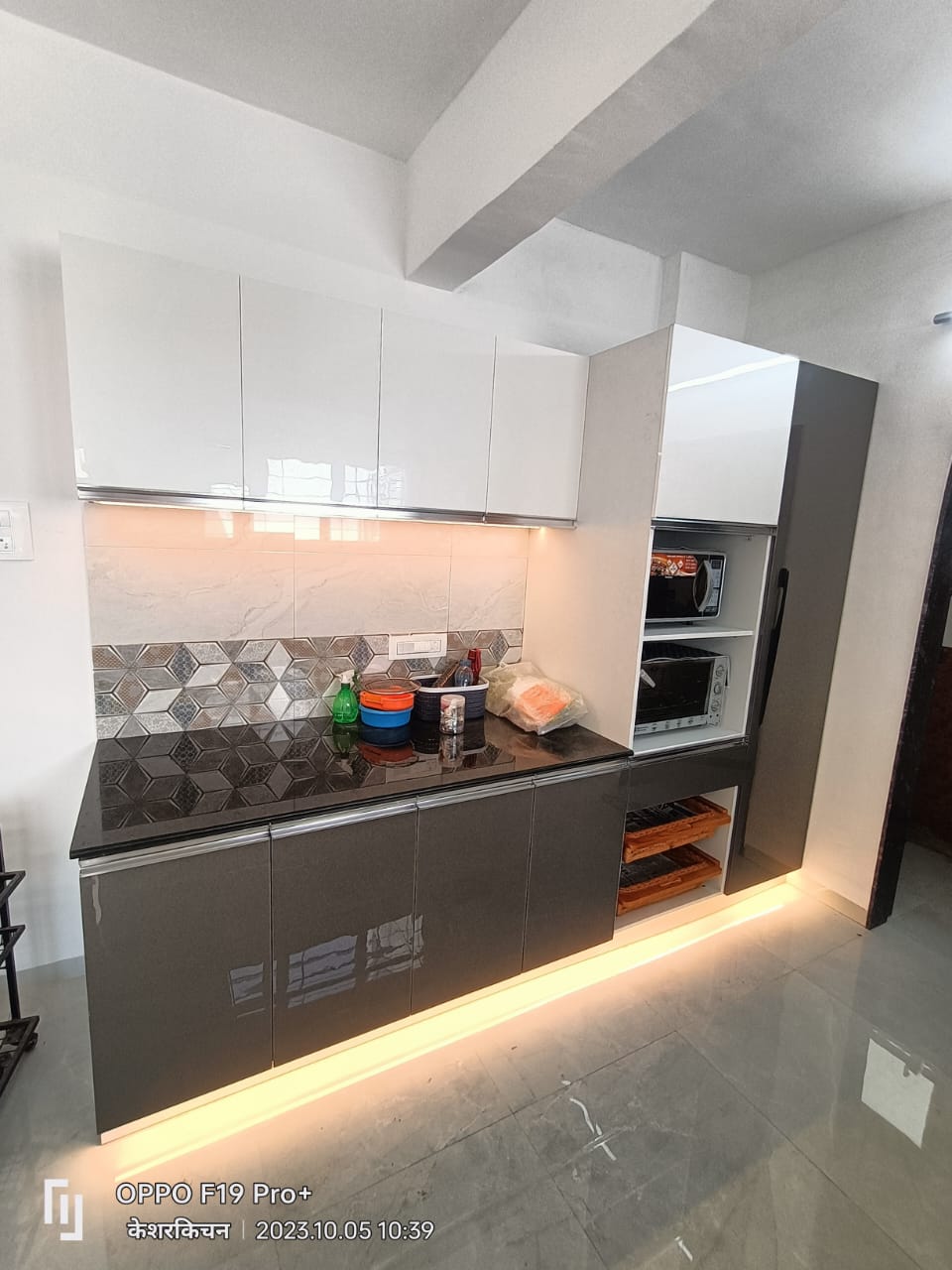 | KITCHEN INTERIOR All types of modular kitchen are manufactured in all over Pune, located in Wanawadi, Fatime Nagar, Hadapsar, Handewadi, Mohammedwadi, Kondhwa, B T... View product → |
Frequently asked questions
What causes modular kitchen cabinet problems in Pune?
Moisture from monsoon humidity, plumbing leaks, wet cleaning, and unsealed cut-outs causes swelling. Heat, steam, cabinet movement, and poor installation also damage laminates, edges, hinges, and runners.
How do you match a kitchen symptom to the failed part?
A sagging or rubbing door points to hinges or cabinet alignment; a sticking drawer points to runners, loose screws, or a distorted cabinet; bubbling laminate indicates heat, moisture, or delamination; swelling under the sink indicates board damage.
Which modular kitchen repairs can you do, and what must be rebuilt?
You can tighten screws, adjust hinges, replace runners, reseal small cut-outs, and correct minor alignment problems. Rebuild or replace panels when MDF or particleboard has swollen, crumbled, or lost its fastener grip.
How should you compare kitchen cabinet repair quotes in Pune?
Compare the proposed structural work, board type and thickness, edge sealing, plumbing protection, labour, hardware, dismantling, disposal, and warranty. A quote that only replaces hardware may leave the underlying damage unresolved.