A child’s wardrobe must support changing clothing sizes, school routines, toys and growing independence without creating a tipping, trapping or circulation hazard. By the end, you will be able to choose an age-appropriate layout, specify safer materials and hardware, measure a Pune bedroom accurately, and compare wardrobe formats before ordering.
Key takeaways
- Place daily clothes, bags and shoes between a child’s shoulder and knee height.
- Use anti-tip anchoring, soft-close hardware, rounded edges and low-VOC finishes.
- Measure doors, windows, lofts, sockets and circulation space before choosing wardrobe dimensions.
- Choose adjustable interiors so the wardrobe works through the next growth stage.
Design the interior around age, routine and reach
An adult wardrobe should not simply be downsized for a child. Wardrobe manufacturing for children bedroom in Pune should place daily clothes, school bags and footwear within easy reach, while leaving high shelves for bedding and seasonal items.
A child-accessible hanging rail is commonly 900–1,050 mm above the finished floor; teen and adult rails are commonly about 1,500–1,650 mm high.
| Age | Interior priority | Practical planning |
|---|---|---|
| Young child | Independence and simple routines | Low drawers, open shelves, toy storage and a rail near 900–1,050 mm |
| Teenager | Uniform rotation, privacy and changing interests | Longer hanging space, adjustable shelves, a taller-rail compartment, bag storage and equipment space |
| Adult | Maximum capacity and fixed routines | Higher hanging rails, deeper storage and fewer child-accessible zones |
A kids bedroom wardrobe in Pune also needs to fit the room’s daily movement. Keep a clear route beside the bed and to the exit; a wardrobe that holds more but blocks a door or drawer path is poorly designed.
Anchor the unit to a structural wall, because a child can tip an overloaded or climbable wardrobe by pulling drawers or using a door as a handhold.
Check the wall for seepage before installation and avoid pressing the wardrobe tightly against a damp external wall. Pune’s monsoon can damage unsealed board edges, backs and floor-level panels. For teenagers, reserve space for longer garments, sports equipment, books, electronics and school bags rather than filling every compartment with small folded-clothing shelves.
Build safety into the carcass, hardware and finish
Safety starts with the carcass and installation, not a decorative theme. For a custom child wardrobe in Pune, specify an 18 mm carcass and shelf board, rounded exposed corners, concealed or covered fasteners, stable shelf supports and wall anchoring into masonry or another structural support.
A wide, shallow unit can tip when a child climbs, pulls several drawers open or uses a door as a handhold; soft-close hardware does not stop that.
Ask the manufacturer to include:
- Finger-safe hinge gaps, protected sliding-door overlaps and door stays that limit opening where required.
- Drawer stops that prevent accidental removal, with no heavy storage concentrated at the top.
- Sealed cut edges, protected bottom edges and a suitable laminate or finish; 18 mm MDF, particleboard or plywood is not waterproof merely because it is laminated.
- A wall-seepage check before installation, with an air gap rather than hard-packing the wardrobe against a damp external wall. Pune’s monsoon can damage exposed backs and floor-level panels.
- Properly supported safety glass for mirror shutters, secure backing and hardware rated for the complete shutter weight. A mirror bonded to board alone is not a safety specification.
| Specification | What to choose | Failure it helps prevent |
|---|---|---|
| Carcass | 18 mm board with sealed edges and anchored fixing | Sagging, moisture swelling and tip-over |
| Internal fittings | Adjustable shelf-pin rows and replaceable rails | A layout becoming unusable as the child grows |
| Shutters | Rounded edges, covered fixings and finger-safe hardware | Cuts, trapped fingers and detached doors |
| Mirror shutter | Safety glass, secure backing and rated hinges | Shattering or shutter detachment |
Measure the Pune bedroom before selecting dimensions
Measure the room as an installation site, not just the wardrobe wall. Record finished-floor-to-ceiling height, wall width at the floor, middle and ceiling, and the maximum depth that leaves the bed, desk and exit usable.
1. Mark the bed, study desk, window, door swing, switches, sockets, skirting board and curtain track on the plan. Check that open doors and drawers do not block the bedroom exit or leave the child without a reachable clearance beside the bed.
2. Inspect the proposed wall for seepage, bubbling paint, mould, damp patches and a musty smell. External walls need particular attention before Pune’s monsoon; unsealed backs, board edges and floor-level panels deteriorate when pressed against moisture.
3. Check whether the floor is level and the wall is plumb. Measure ceiling beams, pipes, loft projections and uneven corners, because a tight carcass dimension can prevent installation or create a dangerous gap.
4. Identify solid anchoring points, such as masonry or structural framing, for the anti-tip fixing. A wide unit can overturn when a child climbs, pulls several loaded drawers or uses a door as a handhold.
5. Mark the intended storage heights from the finished floor. A child rail often sits around 900–1,050 mm; a teen’s longer-garment rail often sits around 1,500–1,650 mm, with adjustable shelves filling the changing space.
Compare hinged, sliding, freestanding and built-in formats
For most children’s rooms, choose a built-in carcass with hinged shutters when the wall is sound and the room has 550–600 mm of wardrobe depth plus door-swing clearance. It gives full-compartment access, simple cleaning and easier hinge or shelf replacement.
| Option | Storage and access | Floor space, repairability and constraints |
|---|---|---|
| Hinged | Uses about 550–600 mm internal depth; exposes the entire compartment at once | Needs clear space in front; hinges, shutters and shelves are straightforward to replace |
| Sliding | Avoids door-swing obstruction; suits a narrow passage | Often needs about 650–700 mm overall depth for tracks and overlaps; dust-filled lower tracks bind, and out-of-square carcasses make doors drag |
| Freestanding | Can move with the child and is easiest to repair or replace | Usually leaves side gaps, uses less wall height and can tip unless anchored; useful in rented homes |
| Built-in | Maximises vertical storage and can include low drawers, adjustable shelves and a taller rail | Harder to relocate or repair; requires accurate wall, floor and ceiling measurements |
Choose sliding only when opening clearance is the limiting problem, not simply because the room is small. The deeper track zone can reduce usable volume. A teen bedroom wardrobe in Pune also needs space for uniforms, long garments, bags and sports equipment, so reserve one taller section and adjustable shelves.
Before installation, check seepage and leave ventilation space from a damp external wall; Pune monsoons punish unsealed backs and floor-level edges. Ask Keshar Modular Kitchen to record the wall condition, service clearances and hardware access before manufacturing.
Related products
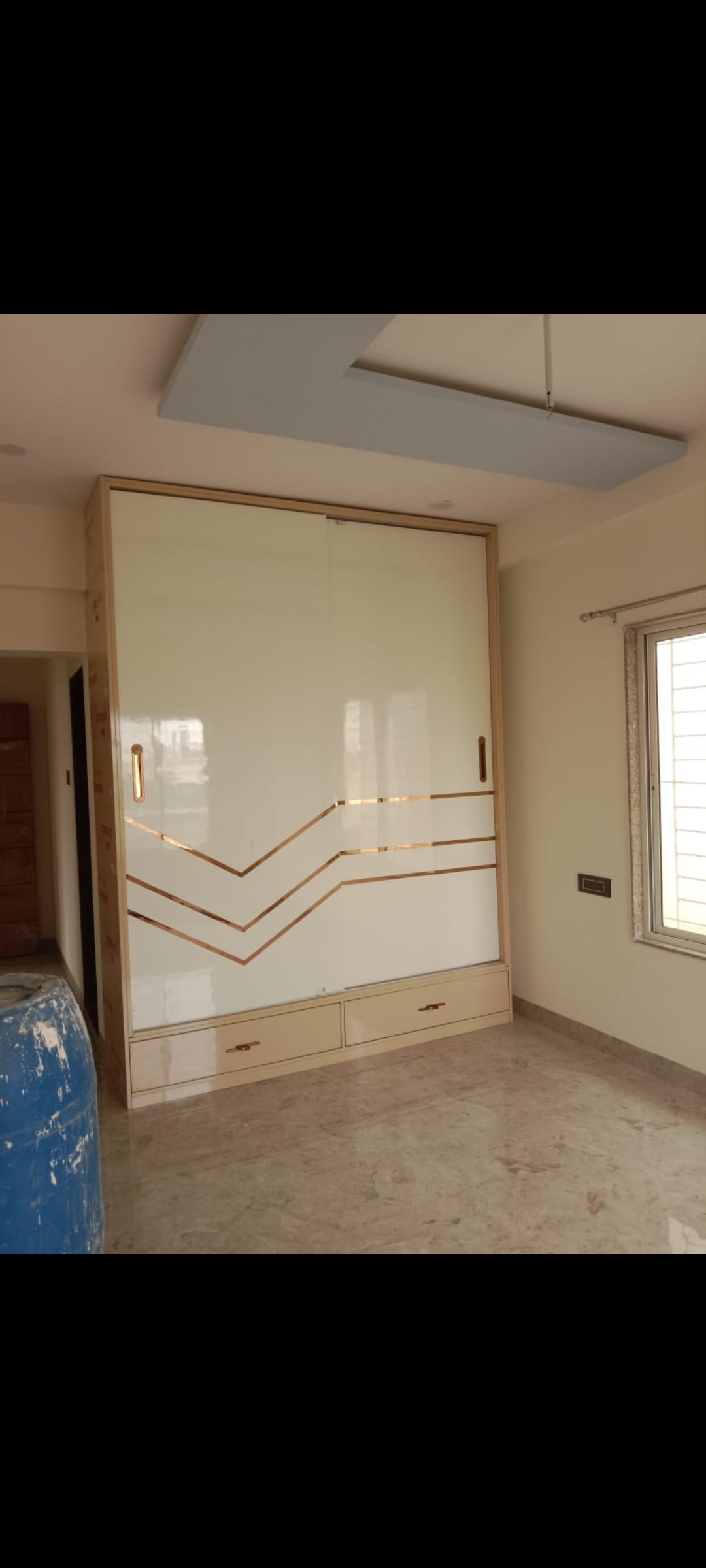 | Wardrobe Wardrobe Manufacturing in Hadapsar wardrobe Manufacturing in Wanowrie Wardrobe Manufacturing in Kharadi View product → |
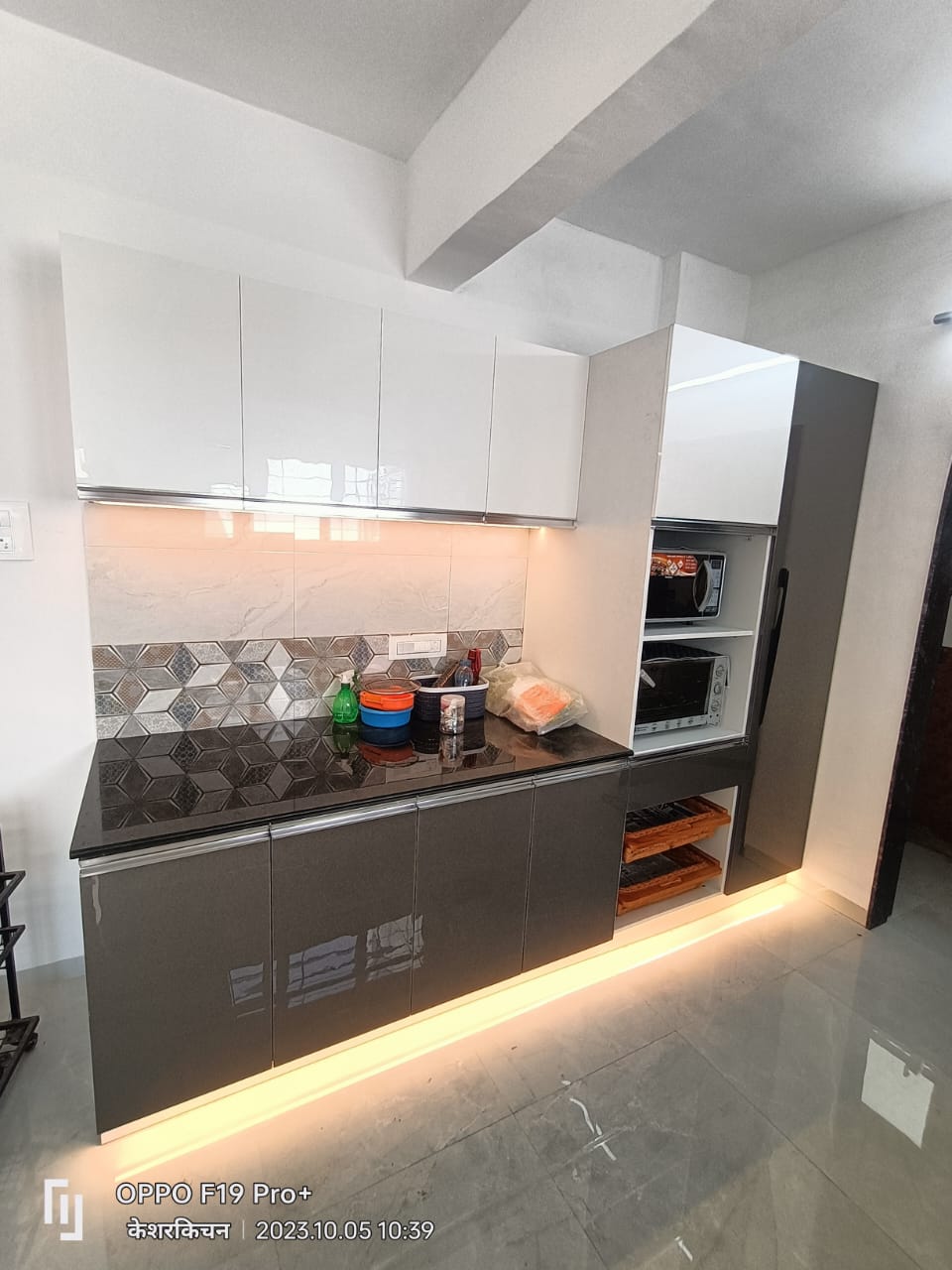 | KITCHEN INTERIOR All types of modular kitchen are manufactured in all over Pune, located in Wanawadi, Fatime Nagar, Hadapsar, Handewadi, Mohammedwadi, Kondhwa, B T... View product → |
Specify a wardrobe that can survive the next growth stage
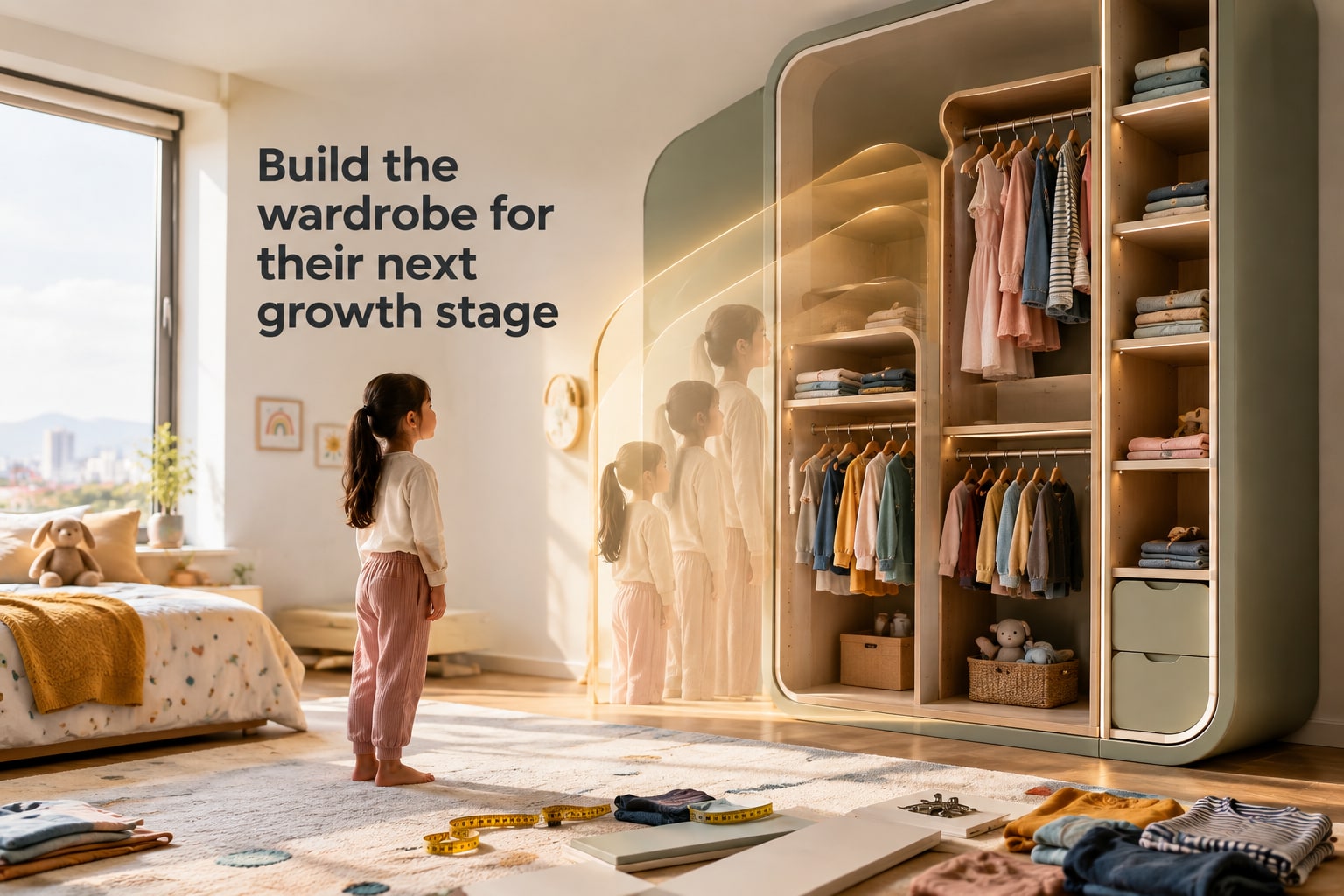
Design the inside to be reconfigured, not replaced. For a children storage wardrobe in Pune, use vertical rows of adjustable shelf pins, replaceable hanging rails and modular drawers. Fixed partitions can look neat at installation but become useless when folded clothes grow, uniforms change or the child stops storing toys.
Ask the manufacturer to include:
- A low daily-use zone for clothes, school bags and footwear
- One tall compartment that can accept a longer hanging rail for uniforms, dresses or jackets
- Drawers or removable bins for changing toy, hobby and accessory storage
- Upper shelves for bedding and seasonal items, without concentrating heavy boxes overhead
- A spare shelf-pin row and accessible fasteners so the interior can be altered later
Leave reachable clearance beside the bed and keep doors and drawers away from the bedroom exit. Maximum volume is a poor trade if opening the wardrobe blocks the desk, window or walking route.
Plan for teenage use before the child reaches it. Reserve space for uniform rotation, sports equipment, books, electronics and private belongings; replace a cartoon finish with removable panels or neutral doors that remain acceptable later.
Check the installation wall for seepage before fixing the carcass, especially before Pune’s monsoon. Keep the wardrobe slightly clear of a damp external wall and seal board edges, back panels and floor-level sections so one wet season does not shorten its useful life.
Frequently asked questions
How should a wardrobe interior change with a child’s age and routine?
Keep daily clothes, school bags and footwear at child-accessible heights, and reserve upper shelves for bedding and seasonal items. Teenagers need more hanging space, drawers and organised storage for school or sports equipment.
What safety features should a children’s wardrobe include?
Anchor the carcass to the wall, use soft-close hinges or runners, fit rounded edges and avoid accessible sharp hardware. Specify low-VOC finishes and secure heavy items on lower shelves.
What should you measure before ordering a wardrobe in Pune?
Record wall width, ceiling height, skirting depth, door and window positions, lofts, electrical sockets and the clear walking space required for doors or drawers.
Which wardrobe format suits a child’s or teenager’s bedroom?
Hinged wardrobes offer full access with a clear opening, sliding wardrobes save floor clearance, freestanding units suit rented rooms, and built-ins use awkward wall space efficiently.
How can a wardrobe last through a child’s next growth stage?
Use adjustable shelves, repositionable hanging rails, replaceable handles and spare capacity. Design the interior around changing clothing lengths, school needs and personal storage habits.
Related products
 | OFFICEINTERIOR Interion Hadapsar, Home Interior Fatima Nagar, Home Interior Pimpri. View product → |
 | HOME INTERIOR Interion Hadapsar, Home Interior Fatima Nagar, Home Interior Pune. View product → |